


History of vulnerable children in Brazil

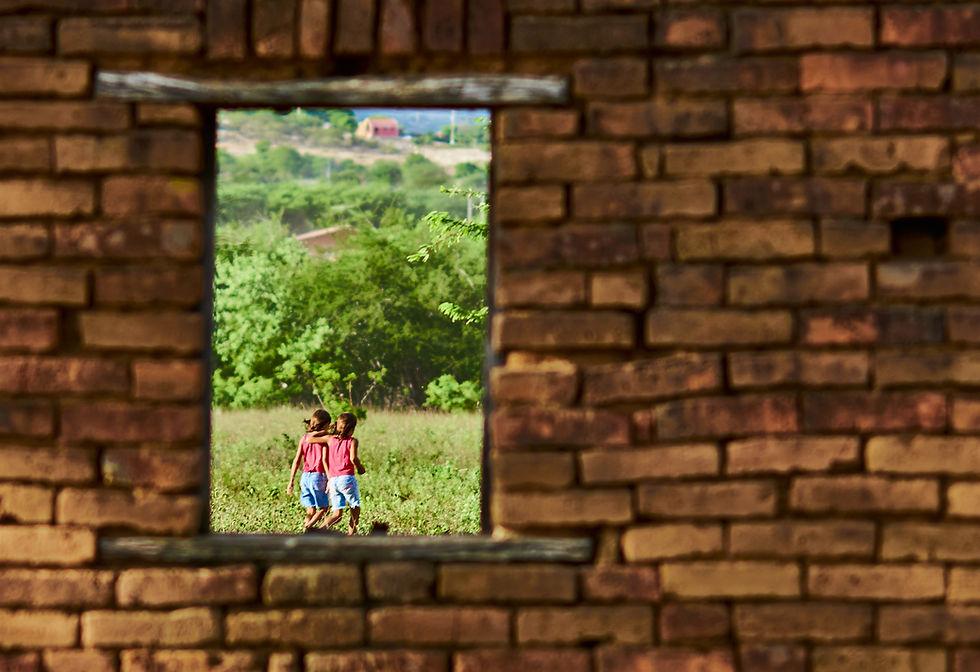
At the beginning of the nineties Brazil legally promised to assume the responsibility to care for children and adolescents, especially those in a socially vulnerable situation. On the 13th July 1990 the Statute for Children and Adolescents, Federal Law number 8.069 was created, fundamentally to give priority for full protection of children and adolescents. These principals guaranteed that all of society, family and state has the right to receive the following, such as life, health, food, education, leisure, profession, culture,
dignity, respect and a family environment and community.
Almost 36 years later it was discovered that these rights were weak and put them at the mercy of the ECA protagonists. The situation intensified when the children and adolescents resided in areas of social inequality as in the case of the city of Recife. Finally in 2024 it was noted by the Observatorio das Metropoles that the metroplitan region of Recife stood out nacionally as one of the worst indications of unequal distribution of income in Brazil ¹.
The daily data points to the following:
1. The right to life – according to the data recorded by the Instituto Fogo Cruzado in the first term of 2025, 11 children and 69 adolescents were shot.
In June, 13 adolescents died².
2. The right to health - In 2025 Recife faced a high alert in respiratory ilnesses, with a significant rise in cases of Sindrome Resiratoria Ajuda Grave, there were 7,375 cases and more than half were in children under 2 years old³.
3. The right to food – Food insecurity affected close to 46% of the children and adolescents in Perambuco (2023-2025), one of the highest levels in Brazil. In Recife nutrition was montitored in 2021/2022 and hundreds of cases of malnutrition were recorded. It improved in 2023 but still a lack of iron rich foods and foods with vitamin A were being eaten.
4. The right to education – Based on the data in the acedemic year 2024, the indication of the age- grade -gap was behind by one or two years, or significant gaps in learning, between children in intial years (1-5) was 13.5 % surpassing the national average of 8%.
We are able to justify juvenile infant vulneralbility for each legal right from the ECA and yet we can still see that many of them are not being realised. But more than understanding this data, it is necessary to reflect on the role each one of us can play in this situation. Finally, the protection of children is not just the responsibility of the state but also society as a whole.
In the face of these realities, we cannot remain indifferent. Each statistic represents a life, a story, and a future that deserves to be protected and cared for.
Every act of care, every opportunity created, and every voice raised in defence of children’s rights contributes to building a fairer and more hopeful society.
At Happy Child, we believe that every child deserves not only to survive, but to thrive — with dignity, love, and opportunity.
Together, we can rewrite this story.
Written by Eduarda Teixeira
Notes


Comments